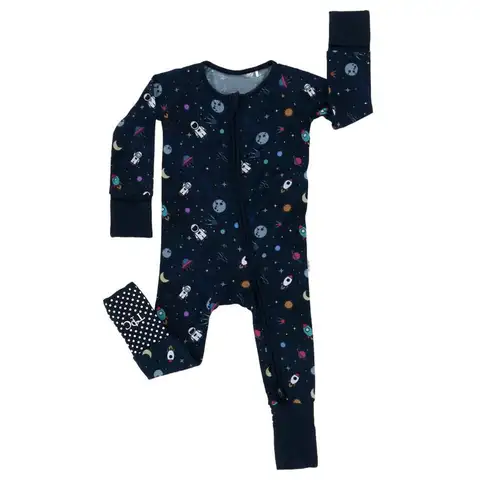
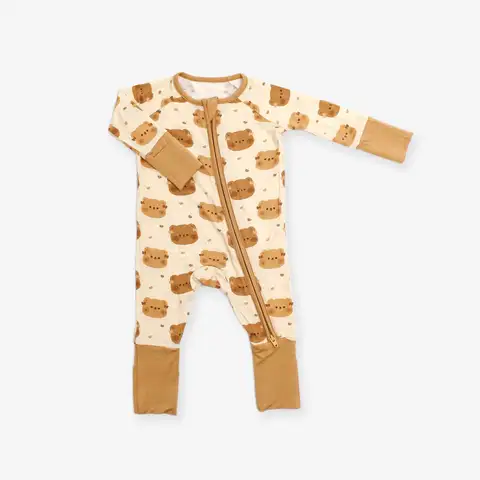
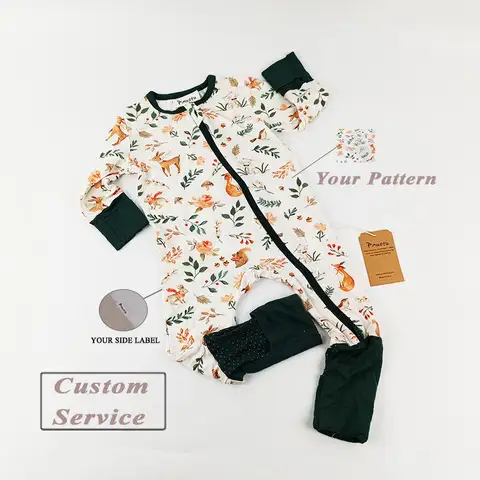
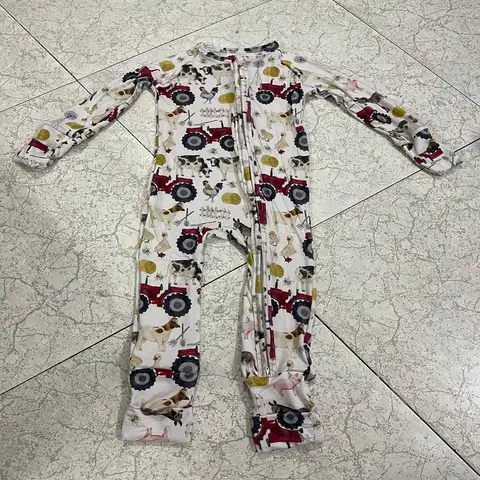
Leading Baby Bamboo Onesie Manufacturer Supplier Verified China
Bulk Pricing Strategies
When approaching bulk pricing for baby Bamboo Onesie, volume alignment is critical. Manufacturers typically offer tiered pricing structures based on order quantities, and understanding GSM consistency across samples ensures product integrity during scale-up. For instance, establishing a baseline GSM measurement for bamboo fabric, such as 180-220 GSM, provides a standard reference during negotiations. Most baby Bamboo Onesie Manufacturer Price List documents outline pricing thresholds in tiers such as 500, 1,000, and 5,000 units.

When negotiating bulk pricing, monitor FOB (Free on Board) costs in relation to weight per shipment. Bamboo textiles lean toward lightweight properties; however, box stacking layouts for shipping efficiency and volumetric pricing considerations for air or sea shipments must be balanced. Ensure your vendor incorporates lockstitch precision into unit manufacturing costs for long-term durability of the baby Bamboo Onesie.
Factory Auditing Practices
Auditing your manufacturer is non-negotiable when sourcing baby Bamboo Onesie. Begin with an analysis of their compliance documents, including ISO 9001 certification for quality systems and BSCI audits demonstrating adherence to ethical production norms. If these certifications are absent, request equivalent proof of quality control protocols tailored to bamboo fabric processing.
Conduct in-person or third-party inspections to evaluate stitching quality, focusing on meticulous lockstitch tension and seam straightness. Random inspections using AQL 2.5 (Acceptable Quality Limit) methodologies are recommended, particularly for high-volume orders listed under the baby Bamboo Onesie Manufacturer Price List. Spot-check finished units for bamboo fiber composition purity, as composite blending can destabilize sustainable branding claims.
Confirm environmental impact mitigation via wastewater management systems present at the factory. Bamboo fabric production involves dissolving plant cellulose using solvents—ensure your factory’s discharge systems meet REACH regulation standards. Factories should also provide documented energy audits highlighting machinery efficiency during textile weaving for the baby Bamboo Onesie.
Supply Chain Resilience Development
Supply chain resilience is fundamental when sourcing baby Bamboo Onesie, especially given the global transportation slowdown and raw material shortages that may arise. Diversify manufacturing partners geographically to mitigate risks associated with regional instability. Establish contracts with vendors offering expedited lead times for bamboo fabric-based apparel production while consistently updating your baby Bamboo Onesie Manufacturer Price List to reflect fluctuating bulk order thresholds.
Investigate logistics hubs facilitating seamless distribution from factory floors to warehouse storage. Opt for manufacturers offering 3PL networks in proximity to ports of origin; this reduces bottlenecks caused by delayed cargo movement. Bamboo textile durability ensures long storage viability without compromising material integrity or product specifications outlined in the baby Bamboo Onesie Manufacturer Price List.
Build redundancy by sourcing alternative raw bamboo fiber suppliers alongside pre-vetted manufacturing facilities capable of processing bamboo threads into finished onesies. Scrutinize vertical integration capabilities within larger vendor ecosystems for enhanced control over the fabric-to-finished-product supply cycle. Periodically request updated global trade data to ensure you remain competitive in pricing negotiations for your baby Bamboo Onesie.
Vendor Communication Framework
Structured exchanges with vendors prevent miscommunication about product specs, certifications, and pricing. Create a standard vendor query sheet including GSM range requirements, lockstitching capabilities, cutting accuracy tolerances, and supply capacity estimates. Circulate these documents prior to finalizing orders listed in the baby Bamboo Onesie Manufacturer Price List.
Establish quarterly review schedules for production status reports, OEKO-TEX compliance updates, and customer feedback gathered from distributors. Continuous monitoring ensures that the baby Bamboo Onesie retains its competitive edge within target markets. Insist on CAD prototypes matching proposed unit dimensions and obtain written confirmation of pattern grading approvals prior to initial production runs.
Integrate real-time monitoring apps into your factory oversight framework. Many modern manufacturers deploy IoT systems offering batch production data across stitch type accuracy, seam finishing consistency, and AQL adherence specifically tailored for baby Bamboo Onesie. Vendors lacking digital tracking systems should provide manual tracking sheets for accountability purposes linked to bulk unit count adjustments listed in the baby Bamboo Onesie Manufacturer Price List.
Bamboo Fiber Specifics in Apparel Production
Bamboo fiber spinning involves intricate processes requiring close regulation, particularly in apparel applications like the baby Bamboo Onesie. Solvent-spun fibers must maintain uniform tensile strength assessed through calibrated testing machinery like universal testing systems. Fiber elasticity directly impacts garment fit, a critical aspect for babywear. Therefore, manufacturers presenting substandard elasticity data on bamboo fabric batches should not feature prominently on your baby Bamboo Onesie Manufacturer Price List.
Moisture wicking is another critical parameter in bamboo textile production. For the baby Bamboo Onesie, moisture management testing ensures heat retention levels appropriate for infant comfort in varying climates. Request lab-tested thermal regulation data from suppliers prior to assigning orders. Vendors should guarantee hypoallergenic coatings on fabric layers, especially for sensitive infant skin, and document chemical treatment methodologies.
Fabric shrinkage considerations should not be overlooked—procure pre-shrunk batches to avoid dimensional inconsistencies during laundering cycles. Bamboo threads naturally exhibit lower shrinkage levels compared to cotton, but testing remains vital. Vendors should correlate shrinkage rates with seam tension durability reports, especially regarding lockstitch applications in the baby Bamboo Onesie.
Distribution and Warehousing Optimization
Effective warehousing strategies underpin successful scaling efforts for the baby Bamboo Onesie. Ensure finished products are palletized using protective multilayer wraps to shield against humidity-related degradation during extended storage periods. Warehouse climate control systems maintaining relative humidity below 50% prevent mold growth on fabric surfaces.
Leverage inventory management software matching batch production schedules reported in the baby Bamboo Onesie Manufacturer Price List to incoming shipment scans at regional distribution centers. Automation minimizes fulfillment-related errors attributable to mismatched unit quantities or category mislabeling.
Employ RFID tagging systems on individual delivery cases to streamline product location tracking. Linked transportation schedules collated alongside digital order systems ensure efficient downstream dispatch processes to distributors. Manufacturers offering bonded warehouse facilities simplify VAT processing across international trade lanes, further reducing end-customer pricing discrepancies for baby Bamboo Onesie.
| Standard Category Range | Boutique Clothing Kids |
| Base Composition | Pima 261nd Gen |
| Quality Audit | SGS |
| Lead Time | 27 Days |
| Elite Application Data | Bamboo Mystery Boxes |
| Eco Index | 98% Certified |
Quality Control Frameworks
Standardizing quality control frameworks is non-negotiable for scalable production cycles of the baby Bamboo Onesie. Implement lot-based testing regimes emphasizing colorfast properties under UV exposure tests. Vendors should routinely examine tear resistance during stress tests, particularly reinforcing critical pressure zones like shoulder seams and snap closures.
Sweat absorption and odor resistance evaluations are equally imperative. Require manufacturers to provide biochemical lab reports certifying antimicrobial bamboo properties and resulting resistance to bacterial growth across fabric layers. Moisture absorption tests should correlate tensile strength benchmarks against customer retention analytics for the baby Bamboo Onesie.
Final inspections using sample-based AQL methodologies ensure consistent delivery post-manufacturing. For mass orders marked under 2,000-unit bulk thresholds in the baby Bamboo Onesie Manufacturer Price List, spot inspections across random unit sequences improve vendor accountability. Avoid signing off shipments until final inspection reports align with pre-agreed AQL 2.5 tolerances.